


Introduction
A conversation about someone's performance is about more than agreements and figures. It is about motivation, about trust, and about whether someone feels seen. That is precisely why these conversations so often go differently than planned: the agenda is right, but the contact is missing. And once the year is over, the appraisal turns out to rest on what you can still remember of the last six weeks.
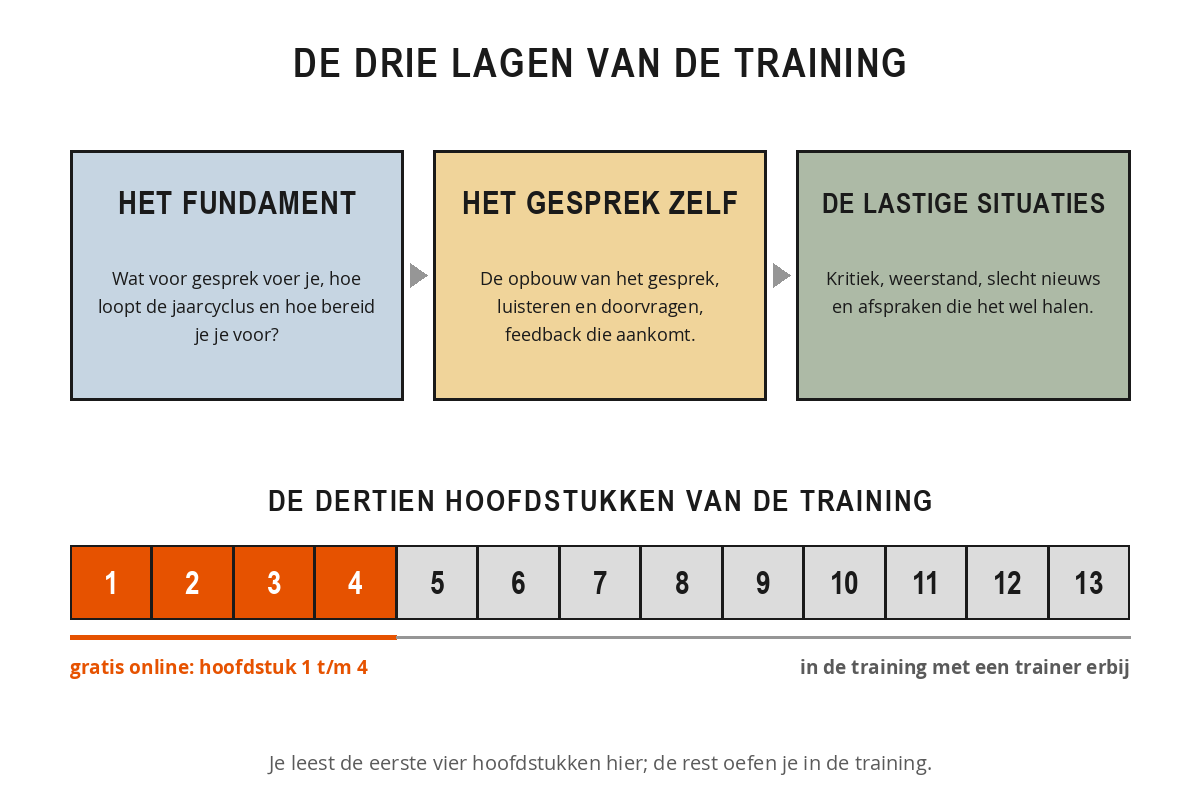
This free course contains the first four chapters: the orange part of the bar above. At the bottom of chapter 4 you will find the full course.
What you will learn
You start with the difference between performance reviews and appraisals. That distinction is the basis for everything that follows: a performance review is two-way traffic and looks ahead, an appraisal interview is one-way traffic and looks back. You then place these conversations within the annual cycle, so that planning, adjusting and appraising support one another instead of existing separately. Next, you prepare a conversation using facts rather than impressions, and finally you conduct the conversation itself, from the opening to the recorded agreement.
The common thread: a good conversation is largely preparation. What you agree in January and write down in March determines how the conversation in December goes.
How the course is structured
The course follows three layers that build on one another. First the foundation: what kind of conversation are you having, how does the annual cycle run and how do you prepare. Then the conversation itself: the structure, listening and asking follow-up questions, making behaviour concrete, feedback that lands. And finally the difficult situations: criticism, resistance, bad news and agreements that actually stick. The four chapters you are reading here together form the foundation, plus the structure of the conversation.
Each chapter contains theory, a diagram, examples from practice and an exercise that you apply to your own conversations.
Practical tips for use
- Choose one employee and one conversation that is coming up in your diary. All the exercises relate to that conversation.
- Keep a blank document to hand. What you note down in chapter 1 you will use again in chapter 3.
- Don't read it all in one go. One chapter, then have a conversation, then carry on.
- Are you not a manager but on the other side of the table? The course works just as well. You will know what you can expect from your manager and how to prepare yourself.
- Come back to what you read earlier. Chapter 2 on record-keeping reads differently once you have had a conversation in which you were short of facts.
Each chapter ends with a short knowledge check of three questions: answer them correctly to mark the chapter as completed. Your progress is saved automatically in your browser.
Enjoy reading, and above all: enjoy the next conversation that goes the way you intended.